
Common Wage and Overtime Issues for Tipped Employees
U.S. and Ohio labor laws define anyone who takes more than $30 per month in tips as a tipped employee. The group includes restaurant and bar workers, and may include other employees such as child and elder care providers, and individuals who provide personal services such as drivers and landscapers. Earning tips can significantly increase a worker’s take-home pay.

Working During the Pandemic and Wage Issues
As coronavirus continues to spread, many employers are changing the rules of how and where employees can work. Taking direction from public health officials and others within the industry, more and more supervisors are allowing employees to work from home even as stay at home orders are lifted. In other cases, schedules have changed or hours have been reduced.

When Background Checks Impact Employment
It is common for employers to use background checks when making an employment decision, such as whether to hire an applicant. Sometimes they are even required, especially if the job that is being filled has duties that include security clearance requirements.

What’s the Status of the new Overtime Rule aka “white collar” exemption? Ohio FLSA Overtime Attorneys
On November 22, 2016, a federal district court in Texas issued a nationwide preliminary injunction against the new “white collar” exemption from taking effect. But for the preliminary injunction, millions of workers would have been entitled to a higher threshold for the minimum pay they must receive in order to satisfy the minimum salary. For comparison purposes, the minimum salary threshold is still $455 per week or $23,660 per year, but under the new law, the minimum salary will be $913 per week or $47,476 per year.

What You Need to Know About Statutes of Limitations
It may be surprising for individuals who do not regularly work within the legal profession, but there are set timeframes when a person is legally able to move a claim forward. This can be frustrating for people who were harmed by a violation many years ago. Moving on a claim as soon as possible is your best way to ensure your legal rights are preserved.

What should I do before signing a severance agreement?
If you’ve recently been laid off or asked to leave your job, you might be handed a severance agreement. Before you sign, it’s important to ask: what should I do before signing a severance agreement? These documents can impact your legal rights, future job prospects, and financial stability. An experienced employment lawyer can help you evaluate your options and avoid costly mistakes.

What should be my overtime rate of pay?
Overtime pay can be confusing. Employees’ entitlement to overtime pay often results in litigation and legal claims because employers are doing one of many things wrong, such as not paying employees at the correct overtime rate, not paying employees for all overtime work performed, or even not paying employees overtime at all. In this blog, we will discuss things that may impact your overtime rate of pay.

SCOTUS ruling entitles Home Health Workers to Overtime Wages
Our Ohio FLSA overtime attorneys blogged in February about a change in the law called the “home care final rule” that entitled approximately 2 million home health workers to overtime pay, overturning an exemption that was outdated. For years, home health care companies profited off the backs of their employees who worked countless hours caring for the elderly, disabled, and others.

Protect Your Rights When It Comes to Background Checks
When a business is moving forward with a hire, there are times when they want to run a background check on a possible employee. This can create frustrations for the job candidate, because even if they are qualified for the position there could be mistakes on their credit report, inaccuracies that could impact their possible employment.

Should I be paid for my internship? Is my unpaid internship legal?
Many employers misclassify employees as “interns” in order to attempt to not provide any compensation or benefits when in fact the interns are employees. If an employer is going to have an unpaid internship, there are many potential issues that may arise, not the least of which is whether the intern is entitled to pay. Our Ohio unpaid wages lawyers are here to assist you with any questions about your right to compensation.

Negotiating a Severance Agreement
When a business is changing, growing, or shrinking, there may be adjustments in the structure of the organization. In those circumstances, executive employees and management positions may be offered severance packages.

How Does the New Overtime Rule Affect My Overtime Pay?
The U.S. Department of Labor announced a new rule on September 24, 2019 that raises the minimum threshold salary for exempt employees. If you have any questions about how this new rule will affect your overtime entitlement, you may contact our Columbus Ohio Overtime Lawyers.

What is my employer’s obligation to provide a reasonable accommodation?
As Ohio ADA attorneys who regularly represent employees in ADA cases, employees must understand that their employers must provide them with reasonable accommodations. A recent opinion by the 6th Circuit Court of Appeals delves into an employer’s duty to accommodate disabled employees with a reasonable accommodation. A Stow firefighter-paramedic had a disability as a result of being blinded in one eye in an incident involving a bottle rocket.

Employer Retaliation and Workers’ Compensation
If an employee files a claim for workers’ compensation, their place of employment cannot lawfully retaliate or terminate that individual. A firing in connection with a workers’ compensation claim is illegal retaliation and a wrongful termination lawsuit could result.

Common Kinds of Workplace Discrimination
When a person is subject to unfavorable treatment because of specific characteristic, as a potential hire or an established employee, they could be a victim of workplace discrimination. This can take place in the context of hiring a potential employee, difference in benefits, pay, promotions, or work assignments, or how an employee is let go.

Can Individuals Continue Unemployment Instead of Returning to Work?
Due to the coronavirus pandemic, unemployment claims have skyrocketed, with reports of over 36 million U.S. workers filing for benefits since the middle of March. Some of these workers were laid off permanently while others were furloughed, a term that suggests an employee may be able to return to their position when economic conditions improve. Current unemployment benefits have been boosted by an additional $600 each week for a limited period of time.

At-Will Employees and Wrongful Termination
An at-will employee is a person who can be terminated for any reason, or can leave their job for any reason, that is not illegal or does not break a collective bargaining agreement or written contract. Ohio is an at-will employment state. But, if you are fired from a job for a reason that is in violation of a state or federal law, compensation may be possible. Discuss your situation with a Columbus employment attorney.

Workplace Protections For Veterans
According to federal law, veterans have the right to be employed in civilian job positions free of discrimination. These protections are in place for individuals who are no longer serving and for members of the active military, including those in the National Guard and the Army Reserves.

Workers Returning After Stay-at-Home Orders
As states ease out of stay-at-home orders, there are concerns on how employees will safely return to their workspaces. Understanding all of the local and federal requirements for reopening and implementing precautions presents a challenge to both employees and employers.

Women Can Work Throughout a Pregnancy
If you are pregnant woman who has experienced a change at your job because of your pregnancy, legal action may be possible. An employer does not have the right to change a person’s hours or shifts solely because the individual is pregnant.

When Is Collective Action Possible?
There are many different types of lawsuits. Sometimes when a group of people were all harmed due to the same employment problem, the issue can be solved through a class action. Doing so is a way to protect the rights of a group of people. In other circumstances, when the case is in response to a violation of the Fair Labor Standards Act (FLSA), the Equal Pay Act, or the Age Discrimination in Employment Act, a collective action may be the right procedure.

What is Tip Pooling and Is It Legal?
Individuals who work in the service industry often rely on tips for a portion of their income. Some of the workers who depend on tips include bartenders, servers, individuals who clear tables between customers, and counter staff. While all of these professions across the business may receive tips, how the tips are handled legally can vary from state to state.

What is The Federal Minimum Wage 2021?
When it comes to the federal minimum wage in 2021, there has been a flurry of questions associated with it such as if it will be going up in 2021 and what the current federal minimum wage in 2021 is.
What Is Severance Pay?
When there is a termination of employment, there may be an offer of severance pay. The amount granted may be calculated based on the length of employment, an amount may be stated within an employee contract, or may be a number arbitrarily selected by an employer.

What Is a Prevailing Wage?
A prevailing wage is a rate of pay set for workers who are working on public works projects. This could be construction workers or trade workers. The basic hourly rate is set for publicly funded projects or projects supported by the government.

What is Intermittent FMLA Leave?
The Family Medical Leave Act (FMLA) is a United States labor law enacted in 1993. FMLA is the right for eligible employees to take unpaid leave for specific medical and family reasons. Because of FMLA, these leaves are job-protected and ensure the person has continued group health insurance coverage under the same terms and conditions as workers who are not on leave.

What are my rights under FMLA?
If you’re wondering what are my rights under FMLA, you’re not alone. Many workers in Ohio and across the country are unaware of the protections granted by the Family and Medical Leave Act (FMLA). This federal law offers vital job protections for eligible employees who need to take time off due to serious health conditions, family needs, or certain emergencies. Understanding these rights is key to protecting your job and income.

Unforeseen Risks for Personal Injuries
Injuries can happen at any place and any time…including at work. Of course, if you work in a heavily intensive physical field such as construction then you are more prone to injuries. For example, you may suffer from slip and falls, back strains, or even broken bones. If you work a desk job, you may think you are safe. However, as a personal injury lawyer can explain, desk jobs come with their own unforeseen risks that can lead to injuries which hinder your ability to work. In essence, no matter what your job, there are still risks:

Types Of Damages Available In An Employment Law Case
If you are considering moving forward with an employment law claim or lawsuit, you may be wondering what the end result will be, such as what you will receive if you win the case. There are a variety of answers just as there are a range of employment law cases. There are financial and emotional damages to consider, and an award should put the person on the same lifestyle track they were on before the violation occurred.
Type Of Work Could Result In An Overtime Exemption
In many situations, Ohio employees who work over 40 hours within a designated work week are due overtime pay. This means that for each hour over the initial 40, compensation will be time and a half. But there are times when workers do not receive the pay they are entitled to, and in other circumstances individuals work in positions that are exempt.

Strengthening Your Ohio Employment Claim
If you are an Ohio employee who is thinking about moving forward with a claim against your employer, there are ways to strengthen a claim. These may include documentation, research, and connecting with a seasoned Columbus employment attorney. Experienced employment lawyers know what you need to do and what timelines need to be followed to secure the best possible outcome.

Steps to Take When There Is a Wage and Hour Violation
If you feel you have a right to unpaid wages from your Ohio workplace, you may be wondering how you can recover the unpaid wages you have earned. There are different forms of wage and hour violations, including but not limited to when: (i) employers do not pay employees overtime wages they have earned, (2) employers pay an amount that is less than minimum wage, or (3) circumstances when an employer fails to administer an employee’s final paycheck. When you talk to a Columbus wage and hour attorney, they can help you strategize the best path to securing your unpaid wages or overtime.

Should I Share My Mental Health Issue with My Boss?
When a person is struggling with a mental health issue, whether that concern is related to anxiety, depression, PTSD, or something else, they may not feel confident sharing that information with their supervisor. And if a person wants to use their right to leave under the Family Medical Leave Act to treat a mental health concern, they could be unsure where to turn.

Reporting Work Injuries Is Essential
Unfortunately, there are times when individuals are injured when they are at work. The range of injuries is wide and varies depending on the industry a person works within. If you work in a fulfillment center, for example, it may be possible for you to slip and fall, resulting in injuries to your neck and spine.

Ohio raises the minimum wage in 2018 – Contact our Ohio Unpaid Wages Lawyers Today
The minimum wage in Ohio has been raised in 2018. Ohio non-tipped employees must now be paid no less than $8.30 per hour (not including overtime). In order to comply with Ohio law, employers must pay Ohio employees at least an amount equal to Ohio’s minimum wage for all hours worked. If you are a non-tipped employee who is not receiving at least minimum wage of $8.30 per hour, you should contact our office to speak with our Ohio minimum wage attorneys today

How overtime is paid – If it is paid properly
What is overtime? Overtime is additional compensation paid to non-exempt employees when they work in excess of 40 hours in any workweek. Overtime is to be paid at one and one-half times the employees’ regular rate of pay (this is not always the same thing as the employees’ hourly rate of pay).

Learning About Working With An Employment Lawyer
There are times when it is in your best interests to work with an employment attorney. For example, if your place of employment has illegally withheld wages, you were wrongfully terminated from your place of work, or if you are discriminated against and harassed at your job. Protecting your rights and holding an employer is accountable.

Laws Are In Place for Fair Pay
There are laws, both federal and state, in place to protect workers’ rights. Employers have a legal obligation to pay their employees fairly for their labor. A federal law, the Fair Labor Standards Act (FLSA) establishes worker rights to a minimum wage, and in Ohio employees are guaranteed a higher amount than what is protected through the FLSA. This is, in part, to keep wages fair with employees living in communities with rising prices in the state of Ohio.

Key Employees Exempt from Family Leave
Many Ohio employees access their right to family medical leave when they have a serious medical concern or when they need to care for another in the family going through a health crisis. There are protections in place under the Family Medical Leave Act (FMLA) which allows workers who are eligible to take up to 12 weeks of leave during a 12-month period. The leave is unpaid, but it remains an important aspect of healing to many families. That said, the law exempts “key employees,” which leads many to wonder who key employees are within an organization.

Is my employer allowed to make me work off the clock?
If you’re asking, “Is my employer allowed to make me work off the clock?”, the short answer is: likely not. Under both federal and Ohio law, most employees must be paid for all hours worked, even if the work happens before clocking in or after clocking out. This includes time spent preparing for work, finishing tasks, or attending required meetings. Employers that ask or expect employees to work off the clock may be violating the Fair Labor Standards Act (FLSA), and employees could be entitled to back pay and damages.

Is It legal for my boss to tell me not to record overtime hours?
If you’re asking, “Is it legal for my boss to tell me not to record overtime hours?” – the answer is almost always no. Employers are generally required to track and pay for all hours worked, including overtime. Telling employees not to record overtime may violate both federal and Ohio wage laws.

Injuries While Working from Home
More and more people are working from home. But what if someone is injured? Work-related injuries are typically covered by workers’ compensation and this can also be applicable when a person is not physically in the office. For example, the compensation covers injuries that happen when visiting a client’s place of work or on a business trip. But if a home injury will be covered depends on many details.

Indicators of a Hostile Work Environment
Sometimes work environments become hostile over time. And often there are indicators the company culture is shifting. This can be seen within businesses that are overlooking unacceptable conflicts between staff, coworkers, and supervisors.
Important Parts of the FLSA
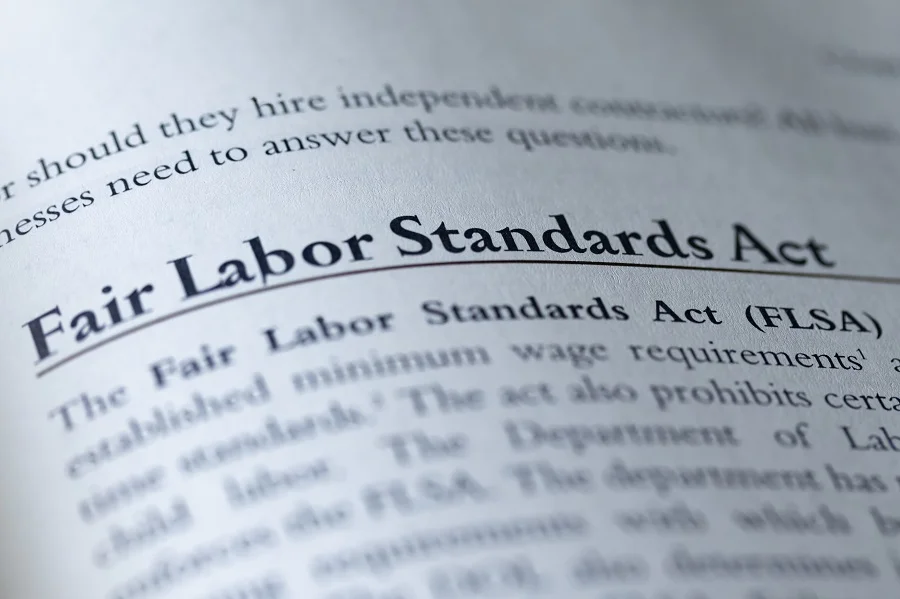
Many employers, in Ohio and around the country, have violated the Fair Labor Standards Act (FLSA). Sometimes it is intentionally violated, in other instances an employer does so without realizing it. Either way, it is against the law. Employees have rights. If your rights were violated, connect with a Columbus employment attorney.

What should I do if I’m being discriminated against at work? Ohio Employment Discrimination Lawyers
Employees may not be discriminated against based on certain bases, including their disability, pregnancy, age, gender, sexual orientation, sexual identity, race, religion, color, national origin, genetic information, or military status. Employees who are members of protected classes are protected from employment discrimination.

How to File an Age Discrimination in Employment Act Charge
It is illegal for Ohio employers to discriminate against employees on the basis of age. This prohibition applies to all aspects of employment, including hiring, termination, promotion, wages and benefits, and training, among others. The law also prohibits harassment based on age.

How To Defend Yourself from False Accusations
False accusations in the workplace can have far-reaching consequences, including damaging your professional reputation and your credibility. When you arrive at work, you are typically not expecting to face accusations of misconduct, illegal activity, or even harassment of another coworker. And while there are legitimate accusations made within the workplace, false accusations can happen as well.

Exceptions to Minimum Wage Rules
Workers have rights, including the right to fair pay for hours worked. Of course, what is considered fair pay has changed over time. Laws need to be followed, employers are not legally permitted to change the rules on their own. The minimum wage in Ohio is set, an employer is not permitted to pay less than that amount, unless the worker has a legal exception, such as a tipped employee.

Am I entitled to overtime compensation if I work over 40 hours per week? Ohio FLSA Lawyers
The answer to the question above is maybe. Employees are entitled to overtime compensation if they work over 40 hours in a workweek and they are non-exempt under the Fair Labor Standards Act (“FLSA”). What does that mean? Whether an employee is exempt or non-exempt depends on the employee’s job duties. Employers may classify employees as exempt and pay them a salary, but that does not mean that employees are truly exempt from receiving overtime wages. Instead, an employee’s proper classification depends on the employee’s job duties.
Employee Rights According To The Law
When you discuss employment law, you are discussing the area of the law that states the rights of individuals within the employee-employer relationship. While this does apply to current employees, it also covers former workers and applicants for open positions. There are a wide range of issues that can lead to an employment law dispute, including discrimination, wages, wrongful termination, and safety concerns.

Employee Questions About COVID-19
As employees return to workplaces, there have been many questions. While each situation is unique, there are a handful of topics that are returned to again and again, such as protective gear compliance and child care.

Does my boss have to pay me for cleaning up after my shift ends?
If you’re wondering “Does my boss have to pay me for cleaning up after my shift ends?”, the short answer is likely yes. Under both federal and Ohio law, employees must be compensated for all time spent working, including after-hours tasks such as cleaning, closing down equipment, or completing paperwork. Employers who fail to pay for this time may be violating the Fair Labor Standards Act (FLSA) and the Ohio Minimum Fair Wage Standards Act (Ohio Rev. Code § 4111).

Do You Know About The Manager Exemption?
If you are an Ohio worker, it is important you understand your rights regarding pay. This includes minimum wage and overtime requirements. Legally, your employer is required to pay workers at least the minimum wage for every hour worked within a workweek, up to 40 hours. Work beyond the 40 hours should be paid an overtime rate, which is 1.5 times an employee’s regular pay rate. But there are exceptions to these Fair Labor Standards Act requirements.

Do you have any rights to paid leave during the Coronavirus pandemic?
We are in an uncertain time with the Coronavirus pandemic spreading throughout our country. Many employees wonder their rights to leave to protect themselves and their families or because they or someone in their home may be at risk. The government has passed new laws related to the Coronavirus pandemic that give employees rights to paid leave under certain circumstances.

Do remote workers get overtime pay?
Do remote workers get overtime pay? Yes, they often may be entitled to it, depending on their job classification and hours worked. Just because an employee works from home doesn’t mean employers are exempt from federal and Ohio wage laws. If you’re a remote employee putting in long hours, especially beyond 40 hours per week, you could have a valid claim for unpaid overtime.

Congratulations 2017 Rising Star Ohio Employment Lawyer
Coffman Employement Lawyers, LLC is pleased to announce that Ohio Employment Lawyer Matthew J.P. Coffman has been named as a 2017 Rising Star Ohio Employment Attorney for the third straight year! Each year, Mr. Coffman strives to be better than the last.

Common Fair Credit Reporting Act (FCRA) Violations
Designed to provide protection for individuals, the Fair Credit Reporting Act (FCRA) is in place to be sure a person’s credit information is correct, free of misuse and misreporting. After all, your credit report can influence your life, it can be a deciding factor in you securing a job, an apartment, car loan, or mortgage. If there has been an FCRA violation, you may have been passed over for employment.

Choosing an Alternative Dispute Resolution in Ohio
If you have a workplace dispute but are looking for a solution other than traditional litigation, you may be interested in exploring Alternative Dispute Resolution (ADR). ADR can save an employee time and money on their path to justice.

Changing Climates Surround Workplace Romances
It is not a new phenomenon for individuals to date others in their workplaces. But the climate around interoffice romances has changed. There are examples of this in large corporations such as McDonald’s, where the CEO was terminated because of poor judgement in pursuing a romantic relationship. The employee was supervised by the CEO. This is one example among many.

Can you sue a company for firing you?
If you’re wondering, can you sue a company for firing you, the answer is: it depends on why you were terminated. While Ohio is an at-will employment state, meaning employers can generally fire employees without warning or cause, there are critical exceptions. If your termination violated state or federal employment laws, you may have grounds for a lawsuit.

Can my employer force me to work through breaks without pay?
If you’re wondering “Can my employer force me to work through breaks without pay?”, you’re not alone. Many workers in Ohio and across the U.S. face this issue, often without knowing their legal rights. While employers can sometimes request flexibility, they cannot violate federal or Ohio labor laws. If you’re being denied paid breaks or required to work through unpaid ones, you may have legal options.

Be Sure You Have the Proper Forms for FMLA
The Family and Medical Leave Act (FMLA) is a path for employees to take a leave from work and still maintain job protections. Before going on leave, it is essential the correct paperwork has been filled out. Ask your employer about FMLA requirements and follow their instructions before going on leave.

Avoid Litigation with Mediation
Sometimes it is possible to resolve a dispute without litigation, an alternative path may be the best way for you to move forward. For example, mediation is a solution for many. A confidential process, mediation is when a third party, someone neutral such as a judge or other experienced legal professional, listens to both of the parties involved in the dispute. They can assess the situation and help the parties work towards a settlement amount both can accept.

Are You An Exempt Or Non-Exempt Employee?
In order to understand your rights as an employee, you need to understand what type of employee you are at your workplace. For example, you need to know if you are an exempt employee or a non-exempt employee. There are differences between the types of jobs these designations hold and if they are paid for overtime hours.

Am I entitled to pay working through lunch breaks?
If you’ve ever asked, “Am I entitled to pay for working through lunch breaks?”, you’re not alone. Many employees across Ohio face this exact issue. Whether you’re eating at your desk while answering emails or constantly interrupted during your break, you may have the right to be paid for that time.

Am I entitled to overtime if I’m salaried?
Many Ohio employees wonder, “Am I entitled to overtime if I’m salaried?” The answer depends on more than just your pay structure. Whether you are eligible for overtime is based on your job duties and classification under the Fair Labor Standards Act (FLSA), not simply your salary status. A salaried employee may still be entitled to overtime if they are not considered exempt under federal or Ohio law.

Am I an Employee or an Independent Contractor?
With more and more people having ongoing yet temporary work with organizations, it can lead to individuals wondering if they are independent contractors or an employee. These classifications matter. They impact your benefit eligibility, your compensation or pay, taxes, and more.

Am I a Contract Worker or an Employee?
It is common for individuals to work as freelancers, sometimes doing the same tasks for the same organization for years. Workers may not even be sure if they are correctly classified as an independent contractor compared to an employee of the company. But, there are legal distinctions between the two classifications. For example, benefit eligibility, taxes, and the amount a worker is paid can all be connected to a position being a full-hire employee position or an independent contractor position.

A Path Forward After a Wrongful Termination
It is always stressful to lose a job. The event can lead to self-doubt and can create financial problems for families. And while there are a broad range of reasons Ohio employers can legally let workers go, there are also instances of illegal termination.

401(k) Plans Are Often a Workplace Benefit
A way to save for retirement, a 401(k) plan is offered by many Ohio employers as part of an overall benefit package. Essentially, it is an opportunity for employees to invest a percentage of their pre-tax income. This way, employees are not paying income tax on their retirement contributions until the money is taken out of the account.

What if I work over 40 hours and am not paid overtime? Ohio Unpaid Wages Attorneys
Our Ohio unpaid wages attorneys have posted numerous blogs containing information for employees who are working over 40 hours per week, but who are not being paid time and a half for all of their hours worked. If you are not receiving overtime compensation for your hours worked over 40 each week, then you should speak with our Ohio unpaid wages attorneys to discuss your rights to unpaid wages, liquidated damages, and attorney’s fees.

Who gets overtime pay? Ohio Unpaid Overtime Lawyers
In general, an employee who works over 40 hours in a workweek is entitled to overtime pay subject to exemptions. If your employer claims you are “exempt” from the Fair Labor Standards Act (“FLSA”), your employer has the burden of proving that you meet the criteria of one of the exemptions. If you are “non-exempt” under the FLSA, then you are legally entitled to receive overtime compensation.

When should I get an employment lawyer?
If you’re asking when should I get an employment lawyer, chances are you’re already facing a workplace issue that may require legal insight. While not every dispute needs a lawyer immediately, many situations escalate without proper guidance. Employment law can be complex, and acting early often strengthens your position.

What qualifies as an ADA disability?
If you’re asking what qualifies as an ADA disability, you’re not alone. Many employees struggle to determine whether their condition meets the legal definition of a disability under the Americans with Disabilities Act (ADA). The ADA provides important protections for workers, but only if specific criteria are met. Understanding how the law defines a disability is the first step toward asserting your rights and speaking with an employment lawyer can help clarify your specific situation.

What is Ohio’s Minimum Wage in 2022?
Ohio’s minimum wage generally changes each year and luckily for employees, it tends to increase. 2022 is no exception. Ohio’s minimum wage increased from $8.80 in 2021 to $9.30 in 2022. This represents an increase in the minimum wage of $0.50 per hour. While the minimum wage is still lower than many other states, a $0.50 increase is a nice benefit to Ohio workers. In this blog, we will discuss several aspects of the minimum wage.

What Is Employee Retaliation?
Did you stand up for yourself or a coworker because they were being harassed? Or did you point out illegal activity at work? Were you retaliated against for doing so? Employee retaliation is illegal. Ohio state law and federal employment laws prohibit bosses or employers from taking revenge against a worker who was within their rights, and it is within your rights to stand up against discrimination. Discrimination on the basis of military status, color, race, religion, sex, age, national origin, or disability is against the law.

Verifying Employment Credentials and Other Checks
It is common for Ohio employers to use background checks when making employment decisions. Many businesses find background checks to be a valuable tool when going through the hiring process. That said, it is essential the tool is used in a legal way.

These Action Could Be Part Of A Hostile Work Environment
Are you wondering what determines a hostile work environment? There are many scenarios that could result in a work environment being toxic, particularly if there is persistent intimidation or severe harassment. Discrimination can also be an issue.

Should I Be Receiving Overtime When I Work from Home?
More and more employees are working from home. Some employers are offering employees the ability to work from home for extended periods of time. Many online companies have even given their employees the option to work from home permanently. But now that working from home is becoming common and not an exception, it is important employee rights are protected. This includes being paid for overtime work.
.svg)

.avif)



.avif)